White Paper
16 Apr 2026
THE EVIDENCE GAP AT THE EDGE OF THE GRID
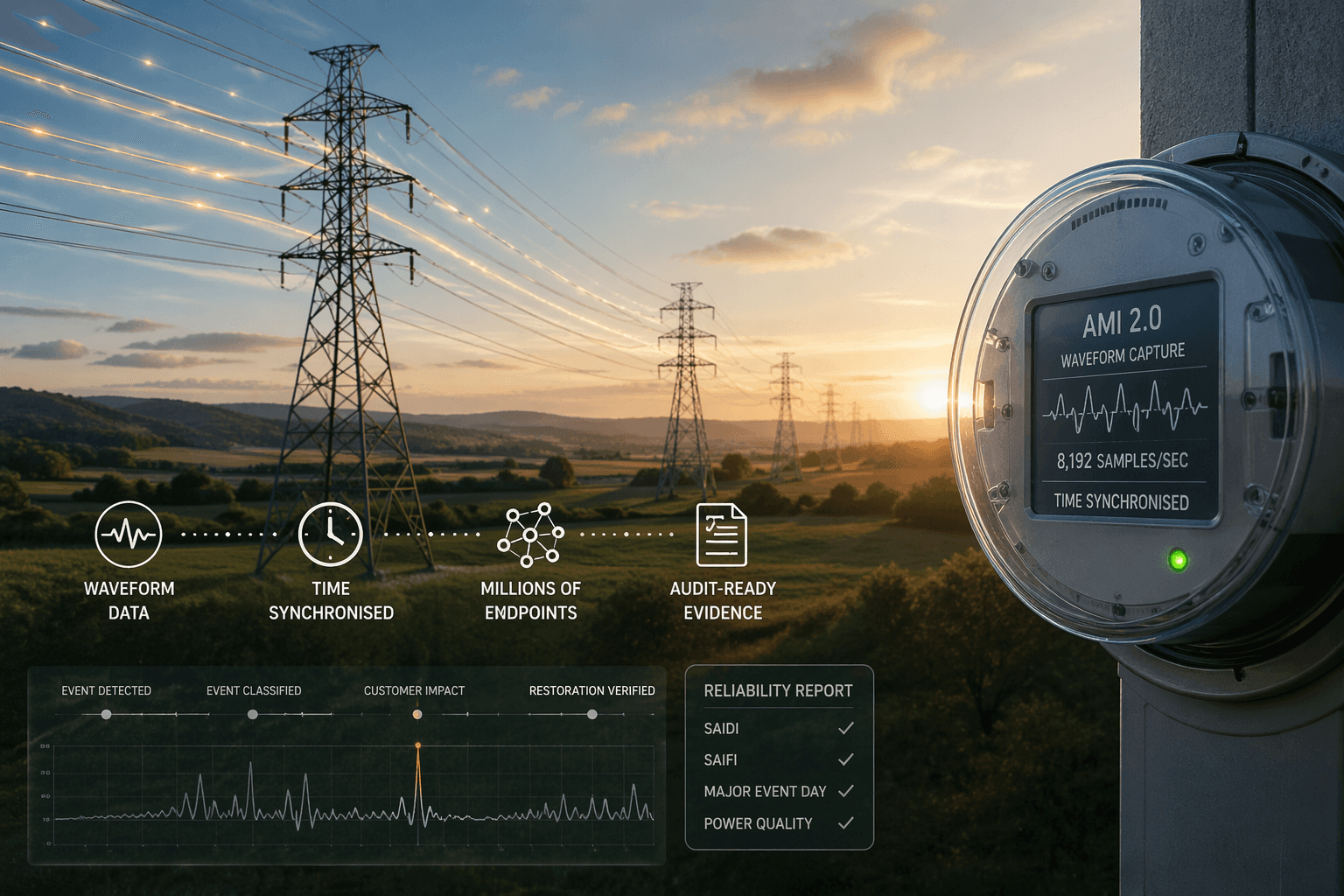
Utilities have a problem. They're required to report on reliability performance with increasing precision - SAIDI, SAIFI, Major Event Day classifications, power quality compliance - but they're doing it from systems that can't show them what actually happened on the network. Event timelines get reconstructed from partial, asynchronous data. Reports get assembled manually, over weeks, by experienced engineers making judgement calls. And then they get filed with a regulator who is increasingly asking hard questions about the methodology behind every number. That gap - between what regulators now expect and what current infrastructure can actually support - is widening. Across the United States, more than thirty jurisdictions are operating under performance-based regulation (PBR) frameworks that tie utility revenues directly to SAIDI and SAIFI outcomes. In 2024, the EIA reported that US electricity customers experienced an average of eleven hours of outages - nearly double the prior decade's annual average. The events driving that number are getting harder to attribute, harder to classify, and harder to defend under audit. But the underlying infrastructure problem is about to be solved - not by utilities, but by the meter manufacturers already deploying the next generation of smart meters at scale. AMI 2.0 devices are categorically different from their predecessors. They capture waveform-level electrical data at thousands of samples per second. They maintain time synchronisation across millions of endpoints. They run software. And they're already being deployed: 3.5 million are in the field today, with 82 million expected by 2031. That infrastructure creates a new standard for what regulatory evidence can look like. Not a reconstruction of what probably happened. A deterministic account of what did. This paper explains why the current approach is failing, what AMI 2.0 makes possible, and how Sentinel Evidence converts that infrastructure into the audit-ready, reproducible regulatory intelligence that utilities actually need.
The standard is shifting from 'best available estimate' to 'explainable system behaviour.' Utilities that don't make that transition will face the same audit challenge they face today - with less justification for the gap.